
Sentiers du Patrimoine ®
Commeny
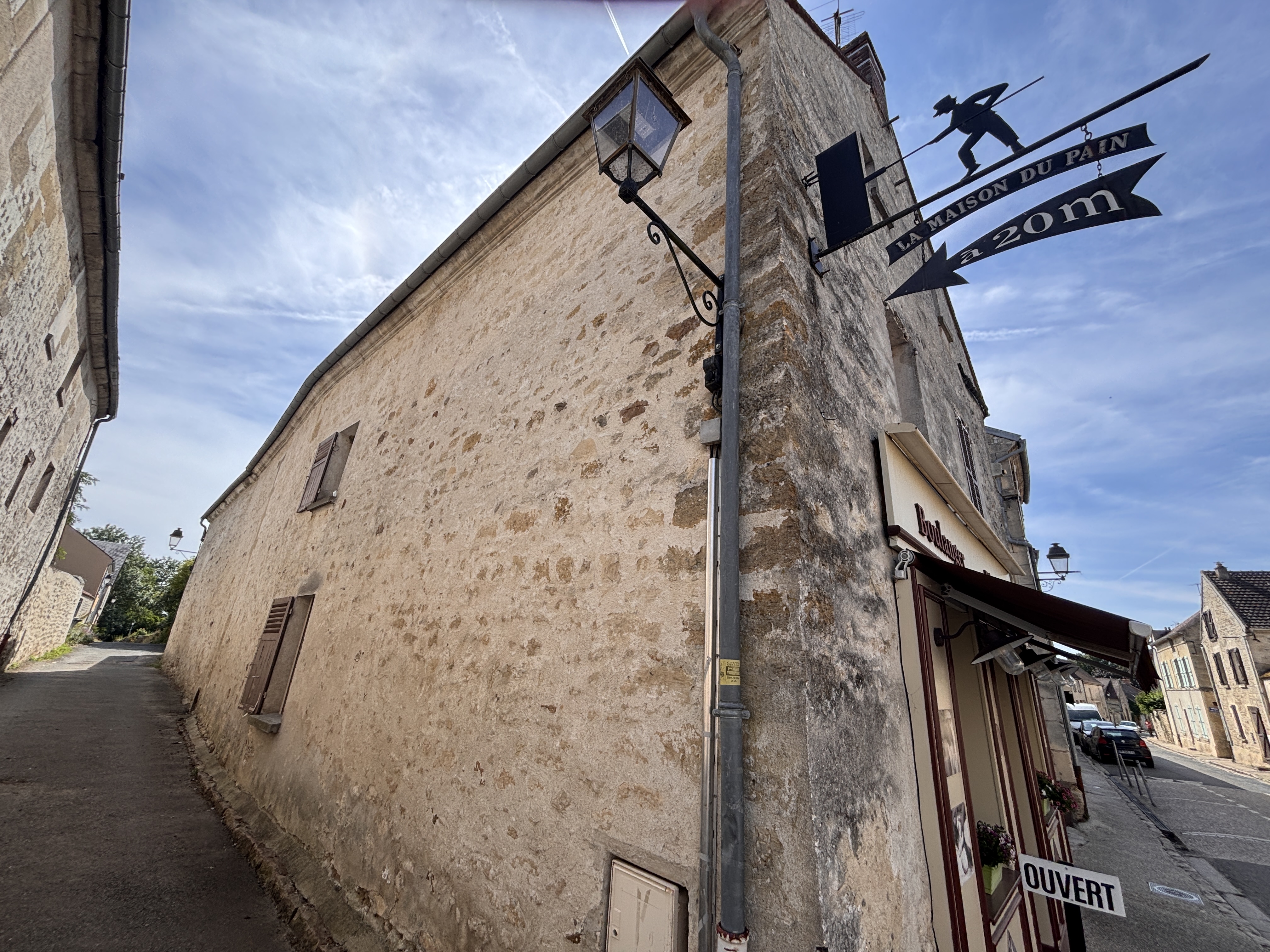
Passer devant la Maison du Pain. Descendre sur 1,4 km jusqu’au lavoir au cœur du bois.
Prochain point : Lat. 49.12724, Long.1.91017
At the beginning of the last century, Commeny had no fewer than nine businesses, most of them located along the Grande Rue: two bakeries, a blacksmith’s forge, a tinsmith’s workshop, a wheelwright, a builder, two grocers who also sold drinks, and a butcher’s shop.
Almost all of these businesses were closely connected to the village’s mainly agricultural economy. Shopfronts generally featured large windows used as display windows, as can still be seen at No. 13 Grande Rue.
Many shopkeepers also travelled to neighbouring towns and villages to supplement their income, while travelling merchants regularly stopped in Commeny. The most modest travelled from village to village on foot with handcarts, while those with greater means made their rounds using horse-drawn carts or even lorries. Others took the train from Santeuil to sell their goods in nearby towns.
The bakery and Maison du Pain were established in the former flour loft of the bakery that once stood at No. 10 Grande Rue.
This former bakery still retains its dormer window projecting above the roof and facing the street. It was used to lift flour or hay up into the loft. The façade was extensively remodelled when the building was converted into a more prestigious residence, with features such as bull’s-eye windows and dressed-stone corner pilasters.
The opening of Maison du Pain in 1998 recalls the importance of cereal farming on the fertile plateau of the French Vexin, which had contributed to the prosperity of local farmers for centuries.
Before the French Revolution, families generally made their own bread, but they were required to have their grain milled at the lord’s mill (moulin banal) and their bread baked in the communal oven (four banal). To use these facilities, inhabitants had to pay a fee to the lord who owned these so-called “banal” buildings.